Three of the most common ways to improve a smile are porcelain veneers, composite bonding and clear aligners. They are often talked about as if they compete, but they actually do quite different things. Knowing what each is good at makes the choice much clearer.
The right answer depends on what is bothering you about your smile, the condition of your teeth, and how much you want to change. Here is how the three compare.
Thin, custom porcelain shells bonded to the front of the teeth. They can change colour, shape, length and the appearance of alignment all at once, which makes them the most versatile option for a full change.
Best for: teeth that are worn, chipped, an uneven shape, or stained in a way whitening will not fix, and for people who want a lasting, comprehensive change. They involve some permanent shaping of the tooth, so suitability matters. More on veneers.
Tooth-coloured resin shaped directly onto the tooth by hand, often in a single visit. It is additive, which means little or no natural tooth usually needs to be removed, and it can be adjusted or repaired later.
Best for: smaller changes such as chips, small gaps, worn edges or reshaping a tooth or two. It is the more conservative and more affordable option, though it does not last as long as porcelain and can stain or chip over time. More on bonding.
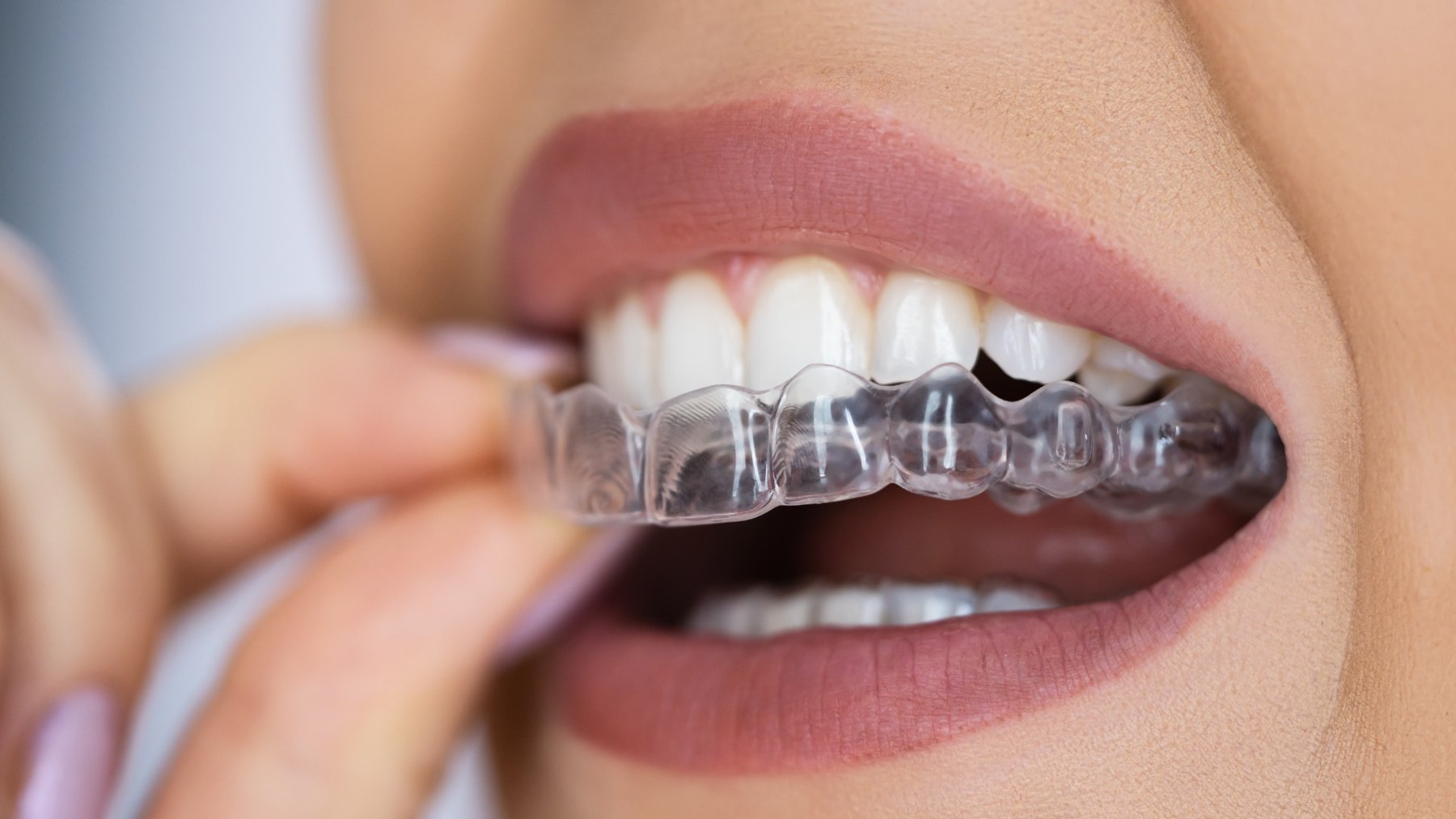
A series of removable, near-invisible trays that gradually move teeth into a better position. Unlike veneers and bonding, aligners do not add anything to the tooth, they move your own teeth.
Best for: crooked, crowded or slightly gapped teeth where the underlying position is the issue. Aligning first is often the most conservative path, and can reduce or remove the need for veneers later. It takes months rather than weeks, and a retainer is needed afterwards. More on aligners.
They are often used together
In practice, the best result frequently combines two of these. A common sequence is to align the teeth first, then refine the shape and colour with a small amount of bonding or a few veneers. Because the teeth start in a better position, less restoration is needed, which is kinder to your own teeth.
How to decide
A simple way to start is to ask what is bothering you most:
- Mainly the colour? Whitening or bonding may be enough before anything bigger.
- Mainly the position (crooked or crowded)? Clear aligners are usually the starting point.
- Mainly the shape of one or two teeth? Composite bonding is often ideal.
- Wanting a complete change in colour and shape together? Veneers are the most versatile.
These are general guides, not a diagnosis. The honest answer for your smile comes from looking at your teeth in person, and a good dentist will recommend the least amount of treatment that gets you the result you want.
A free, no-obligation smile consultation is the simplest way to see your options for your own teeth.